Big Ben: London’s main clock
The story behind its creation: from a fire to an icon
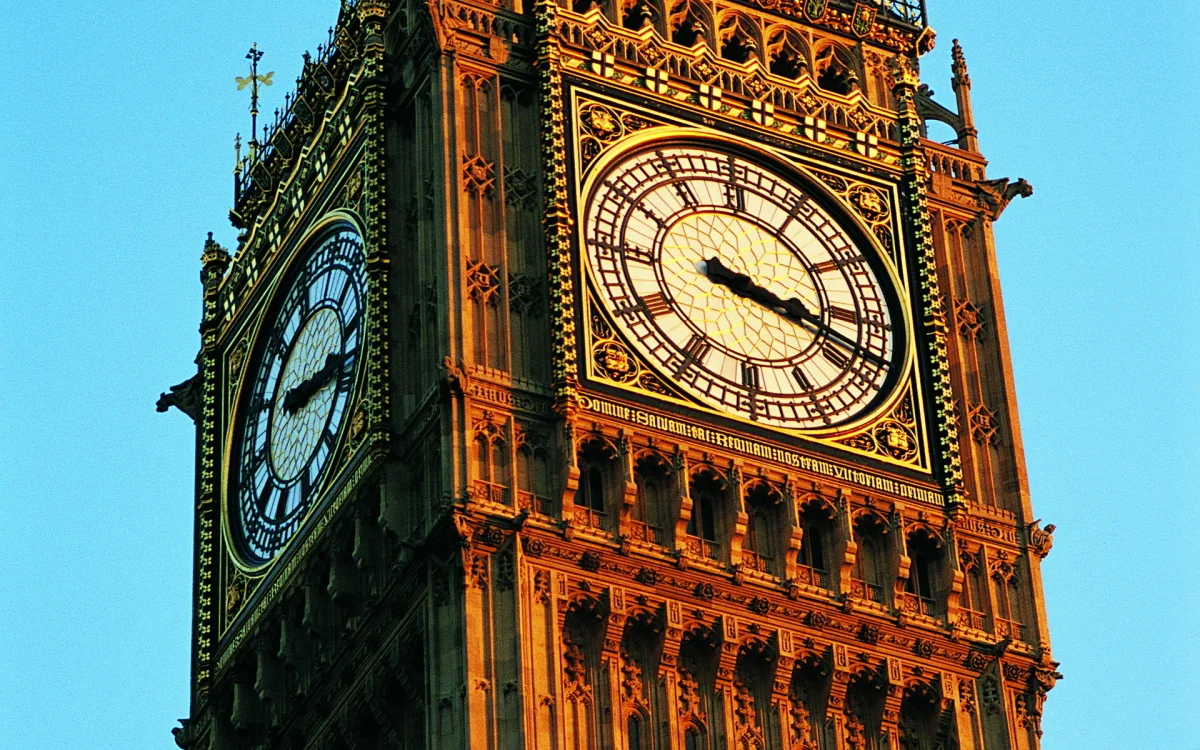
What the whole world has come to know as Big Ben is officially known as ‘Elizabeth Tower’ (until 2012, it was simply the Clock Tower of the Palace of Westminster). It owes its existence to the great fire of 1834, which virtually destroyed the old Parliament building. When designing the new complex, architect Charles Barry decided to complement it with a monumental clock tower. The clock itself was crafted by the self-taught clockmaker Edmund Beckett Denison. He developed a mechanism so precise that it exceeded all the stringent requirements of the Royal Astronomer, who insisted that the first chime of the bell every second should coincide with the time at the Greenwich Observatory.
The 96-metre-high tower was built in 1859. Since then, this clock has become the main landmark of Great Britain, having survived the bombings of the Second World War and numerous technical refurbishments.


Features of the internal structure and hidden details
The very name “Big Ben” is actually shrouded in confusion, as it originally referred exclusively to the tower’s main bell, weighing almost 14 tonnes, and not to the building itself. According to the most popular theory, the bell was named in honour of the imposing Sir Benjamin Hall, who oversaw the construction. To drive the enormous four-metre hands on the four seven-metre dials, the engineers had to create a five-tonne mechanism. Given its sheer scale, the clock’s accuracy is remarkable, thanks to an original and distinctly British regulating system. The clockkeeper adjusts the pendulum’s rate using ordinary old coins: placing a single English penny on it speeds the clock up by exactly 0.4 seconds per day.
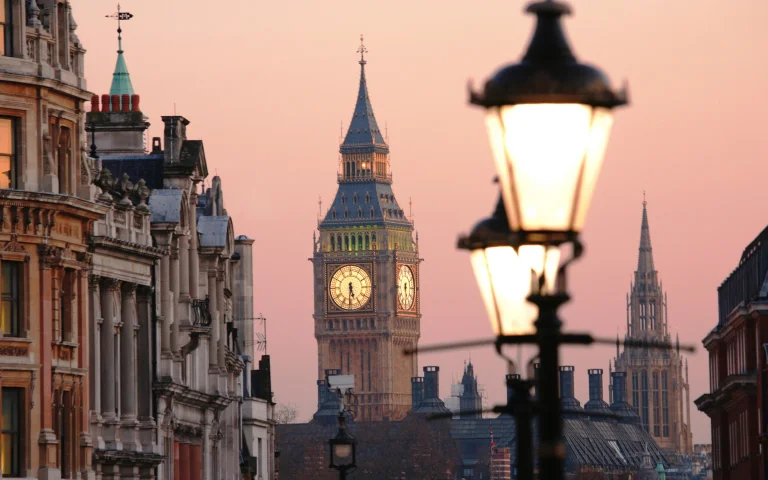

Over the years, the tower’s structure has undergone other changes that are hidden from the view of ordinary tourists. For example, due to the construction of the London Underground directly beneath Westminster, the tower’s foundations have subsided slightly, and the entire structure now leans to one side by almost half a metre. Nevertheless, this does not prevent the clock from running smoothly.
Big Ben recently underwent its most extensive five-year restoration, during which craftsmen completely overhauled the historic mechanism, renewed the gilding and restored the hands to their original Victorian-era blue and gold colour, which had long been hidden beneath layers of black paint and London smog.
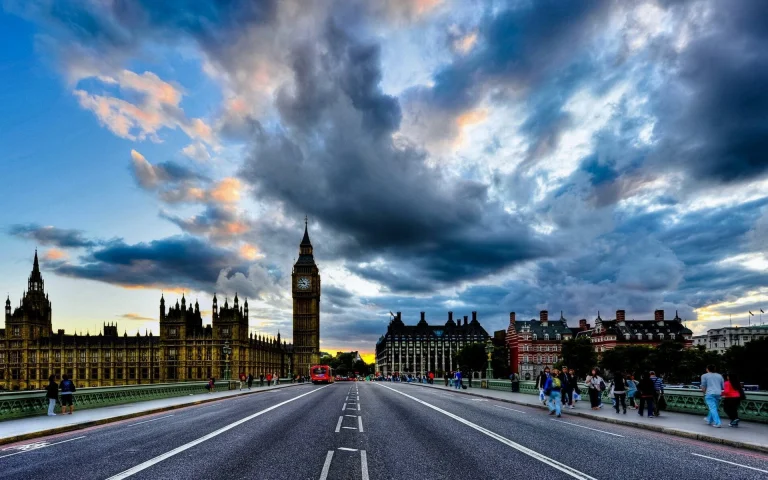



The article “Big Ben: London’s main clock” includes a selection of thematic photo and images suitable for website design, articles, blogs, and creative projects. All images are free to download in high quality.
These images are also great as desktop wallpaper for your computer, phone, or tablet.
Don’t forget to rate and comment on this article – it helps other visitors to our site find popular and truly interesting posts and photos more quickly.


Similar Articles


Thematic Albums




Popular Images