Budapest:
The Contrasts of Buda, Pest and the Spirit of the Danube
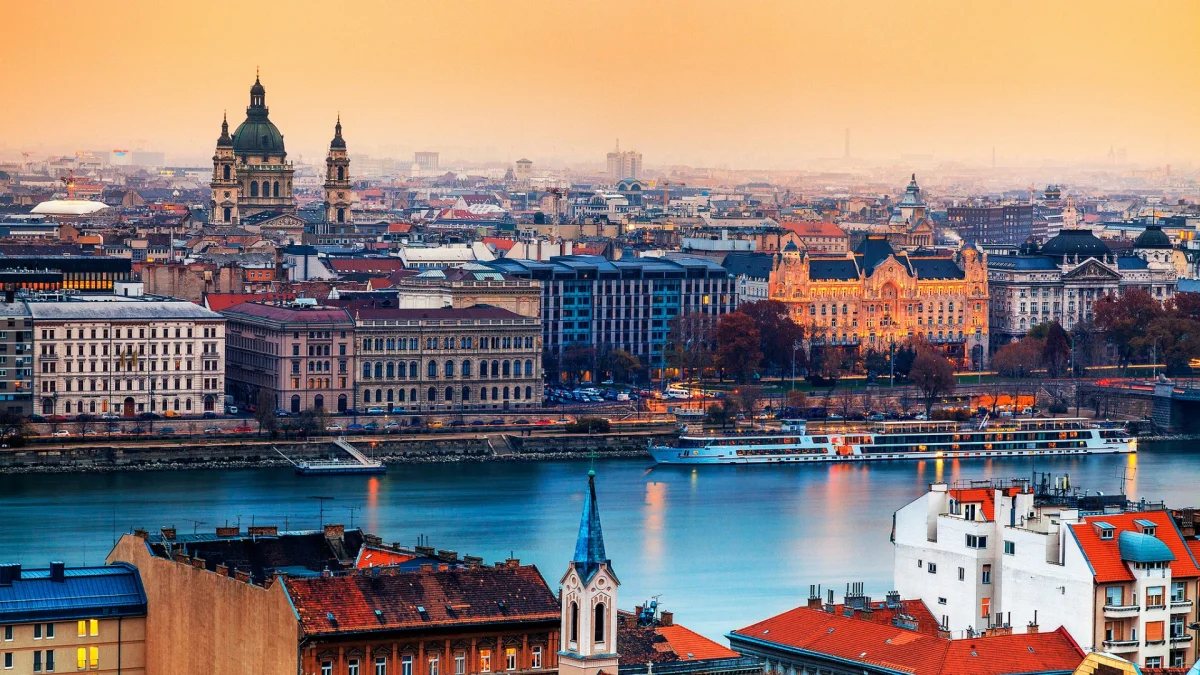
Budapest is often referred to as the ‘Pearl of the Danube’, and this is not merely a figure of speech. The capital of Hungary has a unique character thanks to the contrast between its two main parts, separated by the majestic river: the hilly, ancient Buda and the flat, dynamic Pest.
Two banks — two different histories
Budapest was officially established in 1873 following the merger of three towns — Buda, Obuda and Pest. However, the history of these lands dates back to the times of Ancient Rome.
Today, the hilly Buda side exudes regal grandeur and tranquillity. Perched on the hilltops are Buda Castle, the Fishermen’s Bastion and the Gothic Matthias Church. From here, you can enjoy the most breathtaking views of the Danube and the entire city, especially at sunset, when the first evening lights come on.
Pest, situated on the opposite bank, is teeming with life. It is the centre of commerce, wide boulevards, atmospheric ‘ruin’ bars and monumental late 19th-century architecture. It is here that the city’s main landmark stands — the neo-Gothic Hungarian Parliament Building, which in photo looks like a fairytale palace rising straight out of the water.
-

- The Széchenyi Chain Bridge and the Hungarian Parliament Building, Hungary

-
- The Széchenyi Chain Bridge and the Parliament Building, Hungary

The City of Bridges and Baths
The various banks are linked by famous bridges, each with its own unique style:
- The Széchenyi Bridge (Chain Bridge) — the first permanent bridge across the Danube in Budapest, guarded by stone lions.
- Liberty Bridge — an elegant green metal structure with Turul birds atop its piers.
- Margit Bridge — leading to the eponymous green island park in the middle of the river.
As well as its architecture, Budapest is renowned for its thermal springs. The legendary Széchenyi and Gellért baths combine wellness and relaxation with the luxury of neo-Baroque interiors, making a stay here a truly unique experience.
-

- Chain Bridge and the Parliament Building, Hungary

-
- Chain Bridge and St. Stephen’s Basilica, Hungary

-
- The Erzsébet Bridge and the Danube River, Hungary

The Hungarian Parliament Building — Budapest’s most iconic landmark
The magnificent Hungarian Parliament Building (Országház) deserves special attention — it is one of the most beautiful and recognisable government buildings in the world. Built on the banks of the Danube in the Neo-Gothic style, it is striking in its scale: hundreds of delicate spires, a majestic central dome and a vast façade stretching along the river for almost 270 metres. Its construction required over 40 kilograms of gold and millions of bricks, whilst the finest craftsmen of the era worked on the interiors.
The Parliament looks incredible from every angle. During the day, in pictures, you can make out the finest stone carvings, sculptures of Hungarian kings and the elegant arcade. But this place becomes truly magical as darkness falls — when the golden lighting comes on and the reflection of the glowing lights is cast upon the dark surface of the river. It is these photo of the Parliament at night that travellers from all over the world most often bring back with them.


Looking at pictures and photos of Budapest, it’s easy to see how the majestic history of the Austro-Hungarian Empire and the modern, laid-back pace of life are seamlessly intertwined there.
The article “Budapest: The Contrasts of Buda, Pest and the Spirit of the Danube” includes a selection of thematic photo and images suitable for website design, articles, blogs, and creative projects. All images are free to download in high quality.
These images are also great as desktop wallpaper for your computer, phone, or tablet.
Don’t forget to rate and comment on this article – it helps other visitors to our site find popular and truly interesting posts and photos more quickly.


Similar Articles


Thematic Albums



Popular Images