The Eiffel Tower: the Iron Lady of Paris
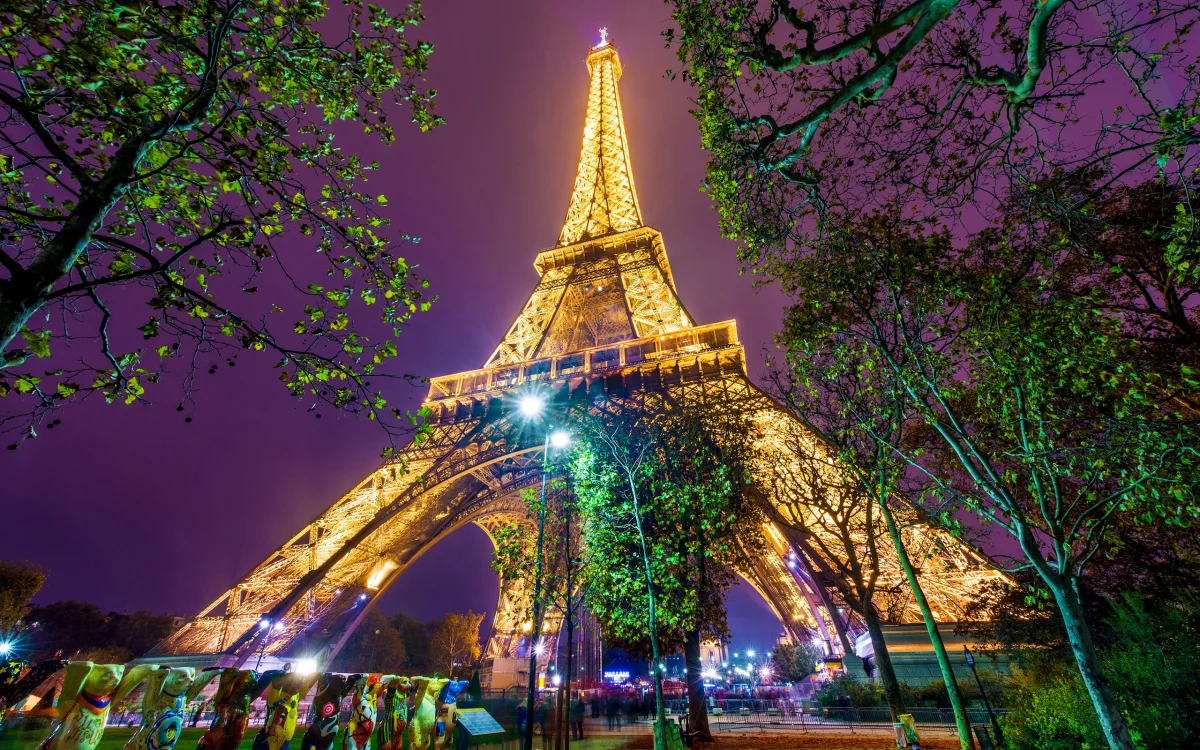
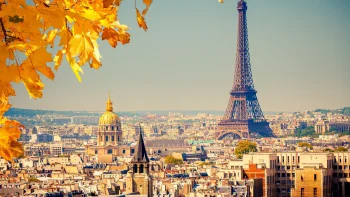
Today, the Eiffel Tower is not only Paris’s most recognisable architectural landmark, but also a global symbol of elegance and engineering genius. It is hard to believe that it was once described as “monstrous” and “useless”, and that France’s finest minds demanded the immediate demolition of this “latticework monstrosity”. However, time has put everything in its place: having outlived its planned 20-year lifespan, the tower has become a national treasure and the world’s most visited paid attraction.


Born of metal and controversy
The tower’s history began in 1887, when Gustave Eiffel won the competition to design the entrance arch for the 1889 World’s Fair, marking the centenary of the French Revolution. The project was a bold one: to build the world’s tallest structure (300 metres at the time) from puddled iron in just two years. Eiffel, an outstanding bridge-builder, applied mathematical precision: each of the 18,038 metal components was calculated to the nearest millimetre, and 2.5 million rivets were required to join them together.


Despite its technical excellence, the Parisian intelligentsia was furious. Guy de Maupassant, Alexandre Dumas Jr and other cultural figures signed a manifesto against the “humiliating” structure. Maupassant later claimed that he dined at the restaurant on the tower’s first level solely because “it is the only place in Paris from which it cannot be seen”. Nevertheless, as soon as the tower opened, it became an instant hit: during the exhibition, it was visited by nearly two million people, fully recouping the construction costs.
The anatomy of a giant and its secrets
The tower’s design is a celebration of functionality. It consists of three levels, each offering a unique view of the city. Today, the first and second floors house fine-dining restaurants and glass-bottomed floors for adrenaline seekers, whilst the third floor, at a height of 276 metres, features an observation deck and a reconstructed study belonging to Gustave Eiffel himself. Few people realise that the tower is “alive”: due to the thermal expansion of the metal, its top can tilt away from the sun by 18 centimetres, and it sways slightly in strong winds.


The colour deserves special attention. To protect the iron from corrosion, the tower is repainted by hand every seven years, using around 60 tonnes of paint. Moreover, the colour is not uniform: three different shades of “Eiffel brown” are used, ranging from the darkest at the base to the lightest at the top, so that the structure appears perfectly monochrome against the sky.
From an antenna to a symbol of eternity
Science saved the tower from demolition in 1909. Eiffel realised that it needed to be put to good use and began conducting meteorological and astronomical observations there. Radio proved to be the decisive factor: the installation of powerful antennas transformed the tower into a strategically important military facility. During the First World War, radio intercepts from the top of the tower helped the French army plan counter-offensives, which finally cemented its right to exist.
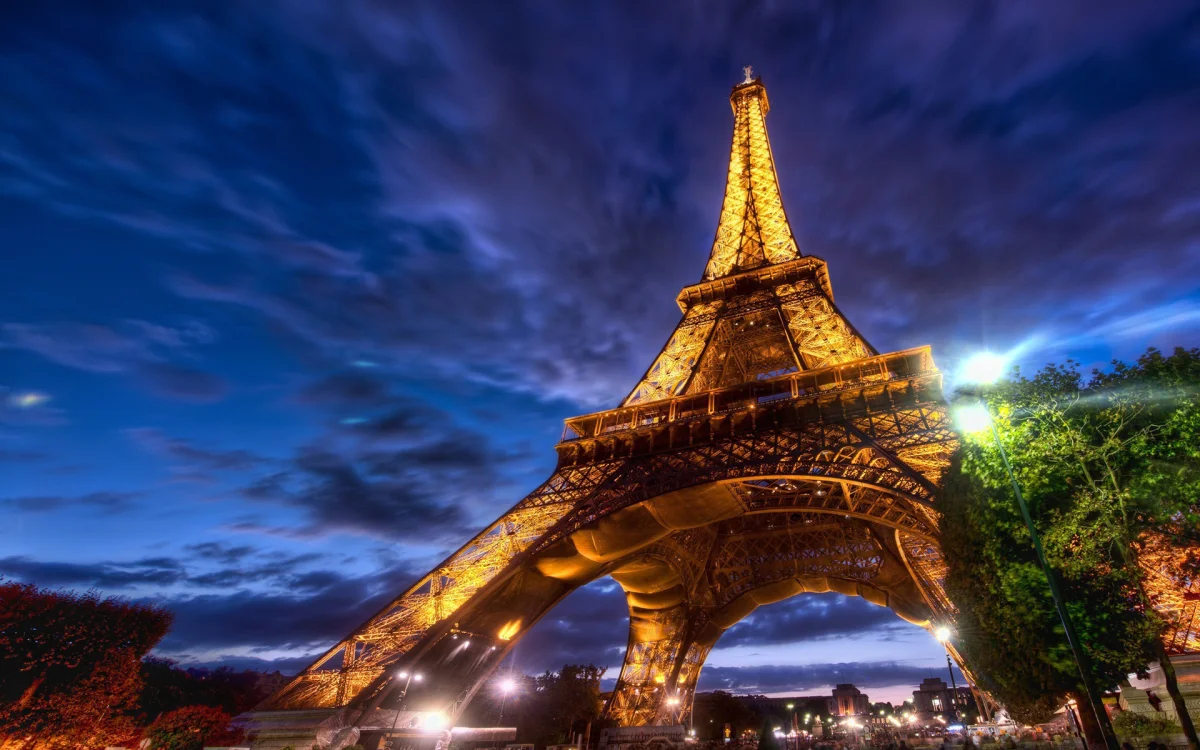
Today, the Eiffel Tower is not only a triumph of engineering but also a cultural phenomenon. Every night it is bathed in golden light, and for the first five minutes of every hour it sparkles with thousands of white sparks. It has witnessed the passing of eras, two world wars and millions of declarations of love. Having become a symbol of Paris, it has proved that true art and bold engineering can overcome any obstacle and stand the test of time.


The Eiffel Tower in figures: Technical specifications
To fully appreciate the grandeur of Gustave Eiffel’s project, it is worth taking a look at the specific figures that make this structure unique even by modern standards:
- Height: The original height was 300 metres. Today, including the antennas mounted at the top, it reaches 330 metres. Until 1930 (when the Chrysler Building in New York was completed), it remained the tallest structure in the world.
- Weight: The total weight of the steel framework is 7,300 tonnes, whilst the total mass of the entire structure, including the concrete foundations and lifts, is approximately 10,100 tonnes. Yet the pressure it exerts on the ground is comparable to that of a person sitting on a chair.
- Components and assembly: The tower is assembled from 18,038 wrought-iron components. Workers used 2.5 million rivets to join them together. Around 300 workers were involved in the construction process, which lasted exactly 2 years, 2 months and 5 days.
- Stairs and lifts: If you decide to climb to the top on foot, you will have to climb 1,665 steps. However, most visitors use the lifts, which together cover a total distance of 103,000 kilometres per year — that’s almost two and a half times the circumference of the Earth.
- Painting and protection: Every 7 years, the tower is painted by hand to protect the iron from corrosion. This requires 60 tonnes of paint, 1,500 brushes and around 20 months of work. The “Eiffel Tower brown” colour is patented and used exclusively for this structure.
- Vibrations and expansion: Iron is a “living” material. On hot days, due to thermal expansion, the structure can grow by 15 centimetres. During the strongest storms, the top of the tower sways to the side by a maximum of 12 centimetres, making it incredibly resistant to wind loads.
- Illumination: To create a night-time glow, the tower is fitted with 20,000 light bulbs (5,000 on each side). The entire system consumes around 7.8 million kWh per year, which is comparable to the consumption of a small village.
These figures confirm that the Eiffel Tower is not merely an architectural monument, but a perfectly engineered mechanism that continues to function flawlessly almost a century and a half after its construction.


The article “The Eiffel Tower: the Iron Lady of Paris” includes a selection of thematic photo and images suitable for website design, articles, blogs, and creative projects. All images are free to download in high quality.
These images are also great as desktop wallpaper for your computer, phone, or tablet.
Don’t forget to rate and comment on this article – it helps other visitors to our site find popular and truly interesting posts and photos more quickly.


Similar Articles


Thematic Albums



Popular Images