New York:
The City That Never Sleeps

New York is more than just the largest metropolis in the United States. It is a massive global financial, cultural, and media hub that sets the pace for the rest of the world. A city of five boroughs, hundreds of languages, and thousands of skyscrapers, it possesses a unique energy that attracts tens of millions of travelers every year.
A Brief History: From Native American Lands to the World’s Capital
The history of the metropolis begins with the island of Manhattan, which for centuries was home to the Lenape Native Americans. In 1624, Dutch settlers established a trading post here and named it New Amsterdam. Forty years later, in 1664, the city came under British control and received its modern name – New York – in honor of the Duke of York.
In the 19th and 20th centuries, the city became the United States main seaport and a key “gateway to America” for millions of immigrants from Europe. It was here that they took their first steps toward a new life. New York grew rapidly upward, forming its legendary skyline of steel and glass towers, and in 1898, its modern boundaries were established, comprising five boroughs: Manhattan, Brooklyn, Queens, the Bronx, and Staten Island.


Major Landmarks and Attractions
New York is literally woven from locations that everyone has seen countless times on movie screens.
The Statue of Liberty and Ellis Island
The primary symbol of American freedom, which welcomed millions of immigrants to the shores of the New World. A gift from France in the late 19th century, this monumental sculpture was the first landmark seen by immigrants arriving by ship as they passed through the historic immigration center on Ellis Island. Today, by ascending to the observation deck in the statue’s crown, you can enjoy a breathtaking panoramic view of New York Harbor and the skyline of Lower Manhattan.


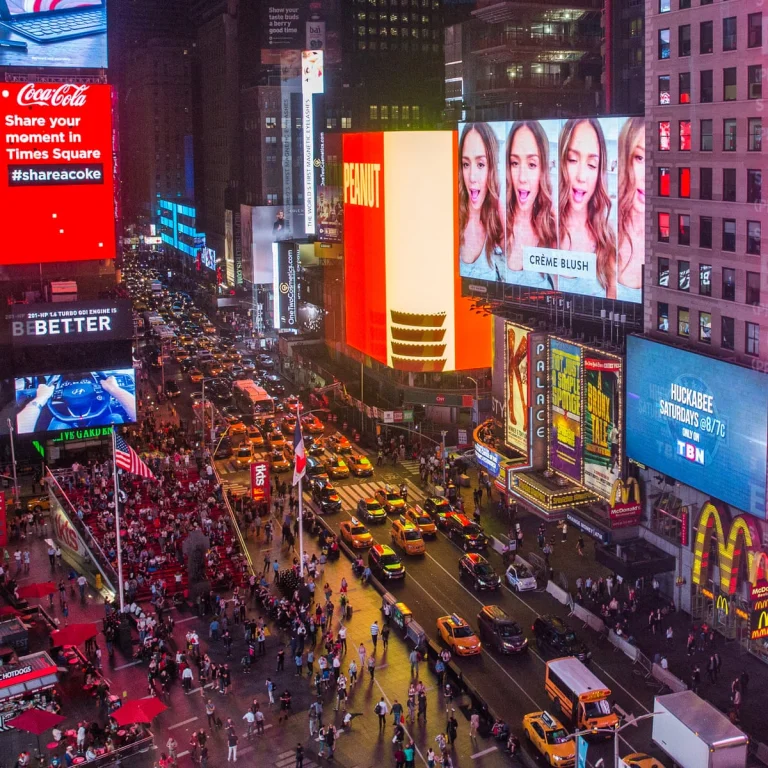
Times Square
The heart of Manhattan and one of the most visited pedestrian areas in the world, literally awash with a sea of neon advertisements and giant LED screens. Located at the intersection of Broadway and Seventh Avenue, this square serves as the epicenter of the global theater scene, home to famous musicals. It is here that hundreds of thousands of people gather every year to watch the traditional crystal ball drop and ring in the New Year together with the rest of the world.




Central Park
A vast man-made oasis covering more than 3.4 square kilometers, located right in the middle of Manhattan’s concrete jungle. Picturesque lakes, shady paths, spacious lawns for picnics, the historic Belvedere Castle, and even its own zoo create a striking contrast to the stark lines of the surrounding skyscrapers. It is the premier destination for recreation, sports, and strolls for both locals and visitors alike.


-

- Central Park

Brooklyn Bridge
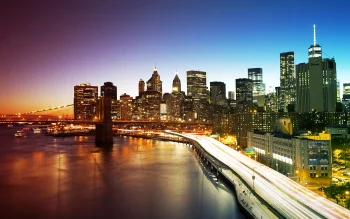
One of the oldest and most recognizable suspension bridges in the United States, connecting Manhattan and Brooklyn across the East River. Its monumental Gothic granite arches and web of steel cables were a remarkable engineering achievement of the 19th century. The two-level design allows pedestrians and cyclists to walk on an elevated wooden deck above the flow of traffic, and a stroll across the bridge from Brooklyn toward Manhattan at sunset is a must-do for every tourist.


Empire State Building
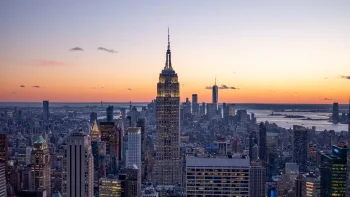
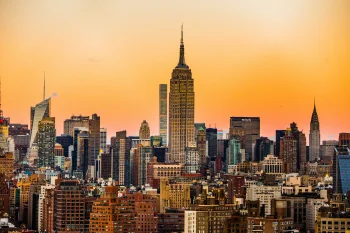
An iconic 102-story Art Deco skyscraper that held the title of the world’s tallest building for four decades. Its open-air observation deck on the 86th floor is one of the best vantage points in the city, offering a breathtaking 360-degree panoramic view of Manhattan, Central Park, and New York Harbor. In photos, the tower is particularly recognizable thanks to its signature metal spire and bright nighttime lighting, which changes color to celebrate holidays and major global events.


Fifth Avenue
One of the most famous, elegant, and expensive streets in the world, cutting across Manhattan from south to north. It serves as a sort of boundary between the eastern and western parts of the island, and its central section has long been synonymous with luxury shopping and high culture. It is here that the flagship boutiques of the world’s leading fashion houses, the legendary Tiffany & Co. jewelry store, and the majestic St. Patrick’s Cathedral are located. In addition, along the northern part of the street, bordering Central Park, stretches the famous “Museum Mile”, which brings together the New York Public Library’s Main Building, the Metropolitan Museum of Art, and the Solomon R. Guggenheim Museum. In the photos of Fifth Avenue, all the glamour of Manhattan is clearly visible – from the sparkling storefronts and yellow cabs to the monumental facades of cultural institutions.


The Flatiron Building: The Legendary “Iron”
Among all of Manhattan’s skyscrapers, the Flatiron Building holds a special place. Built in 1902 at the intersection of Broadway, Fifth Avenue, and 23rd Street, this 22-story skyscraper earned its famous nickname, “the iron,” because of its unique triangular shape, which perfectly matches the contours of the wedge-shaped city lot.


In the photos of New York City streets, this contrast is clearly visible: historic 19th-century brick buildings stand side by side with ultra-modern skyscrapers.
The culture, lifestyle, and atmosphere of the five boroughs
New York City is remarkably multifaceted. It feels less like a single city and more like a vibrant tapestry of different cultural worlds. Here, you can catch a Broadway musical, then head to the Museum of Modern Art (MoMA) or the Metropolitan Museum of Art, and in the evening, sample authentic street food in Chinatown or Little Italy.
The city’s unique charm comes from its yellow taxis, bustling subway lines that run around the clock, the park-lined Hudson River waterfront, and the aroma of freshly brewed coffee from street carts.




New York City at Night
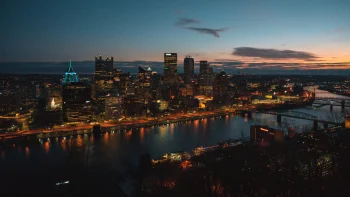
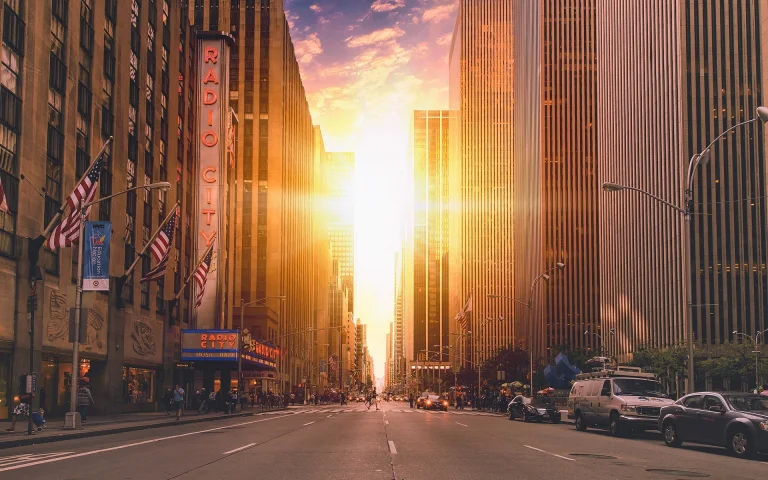
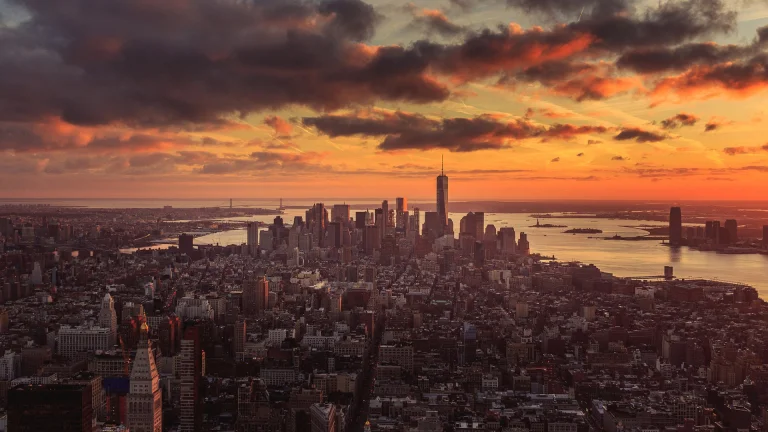
As dusk falls, New York City is completely transformed, revealing its second, equally mesmerizing side. When daylight fades, the metropolis bursts into life with millions of lights: the endless strands of highway lights turn into glowing golden and red arteries, and the glass facades of skyscrapers reflect neon glare. From the heights of observation decks or the Brooklyn waterfront, Manhattan at night looks like a vast, glowing carpet of steel towers. In photos of the city at night, the illuminated, ornate bridge structures, the shimmering waters of the Hudson, and the streets ablaze with lights look particularly impressive. Looking at such images, it’s easy to see why New York’s atmosphere becomes truly magical after dark.


Looking at pictures of New York – whether it’s a foggy morning in Brooklyn or the evening lights of Manhattan – it’s easy to see why people fall in love with this dynamic and contrasting city at first sight.




The article “New York: The City That Never Sleeps” includes a selection of thematic photo and images suitable for website design, articles, blogs, and creative projects. All images are free to download in high quality.
These images are also great as desktop wallpaper for your computer, phone, or tablet.
Don’t forget to rate and comment on this article – it helps other visitors to our site find popular and truly interesting posts and photos more quickly.


Similar Articles


Thematic Albums



Popular Images