New Orleans
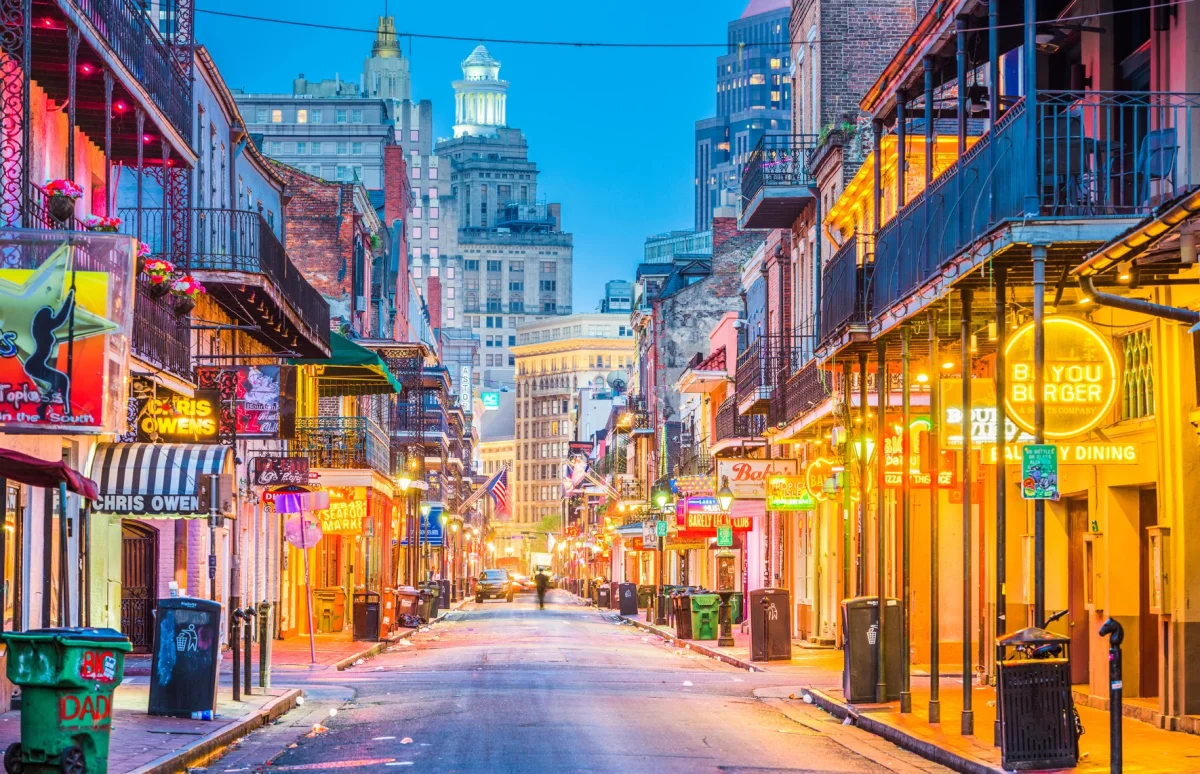
New Orleans is nothing like the America we’re used to. Located in the Mississippi River Delta, this city has absorbed French, Spanish, African, and Caribbean traditions, creating a truly unique culture. It is called the birthplace of jazz, the festival capital, and the most mystical corner of the U.S..
History: From a French Colony to a Cultural Melting Pot
The city was founded by the French in 1718 and named after Philip II, Duke of Orléans. Over the course of its history, it came under the rule of both France and Spain until it became part of the United States in 1803 as a result of the famous “Louisiana Purchase.”
Its complex history of colonization and vibrant trade have made New Orleans a true melting pot of cultures. Here, European architectural traditions, African rhythms, Creole cuisine, and Voodoo traditions—brought by settlers from the Caribbean islands—have all intertwined.
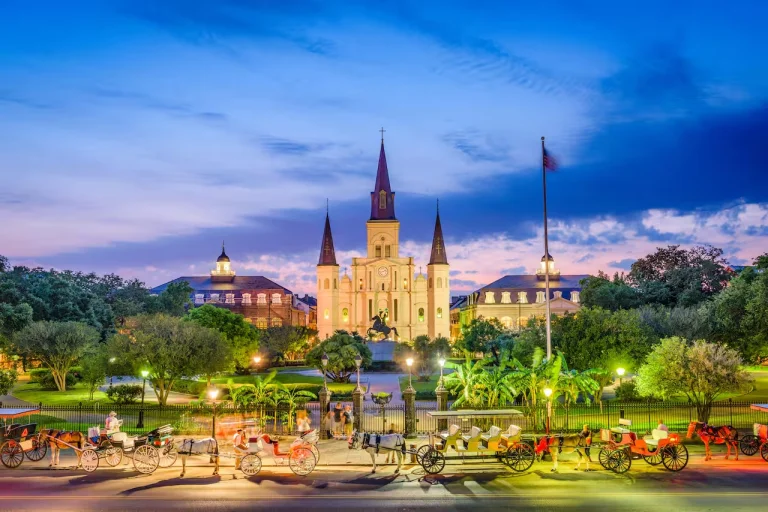


The Heart of the City: The French Quarter and Bourbon Street
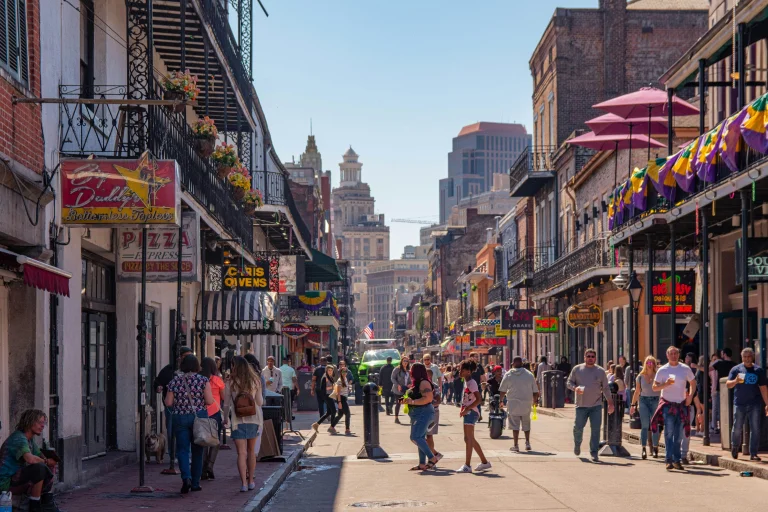
The historic center of the city is the French Quarter (Vieux Carré). This area is easily recognizable by its ornate cast-iron balconies, historic courtyards, and colorful facades of Spanish and French-style buildings.
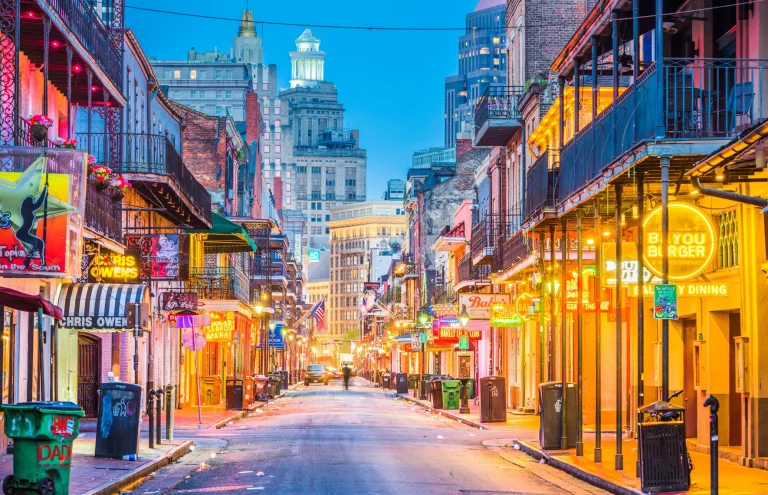
The main entertainment hub is the famous Bourbon Street. It’s bustling with life at any time of day or night: live music drifts out from the doors of bars, and street musicians put on impromptu concerts right on the sidewalks.
In the photos of the French Quarter, this unique festive atmosphere is clearly visible: historic gas lamps, colorful signs, and people enjoying life without any unnecessary hustle and bustle.
-

- The French Quarter, United States
The Birthplace of Jazz and Mardi Gras
Music permeates every corner of New Orleans. It was here, at the turn of the 19th and 20th centuries, that jazz was born from a fusion of African drum rhythms, the blues, and European brass bands. The city gave the world the legendary Louis Armstrong, and today jazz can be heard everywhere – from street corners to the atmospheric clubs on Frenchmen Street.
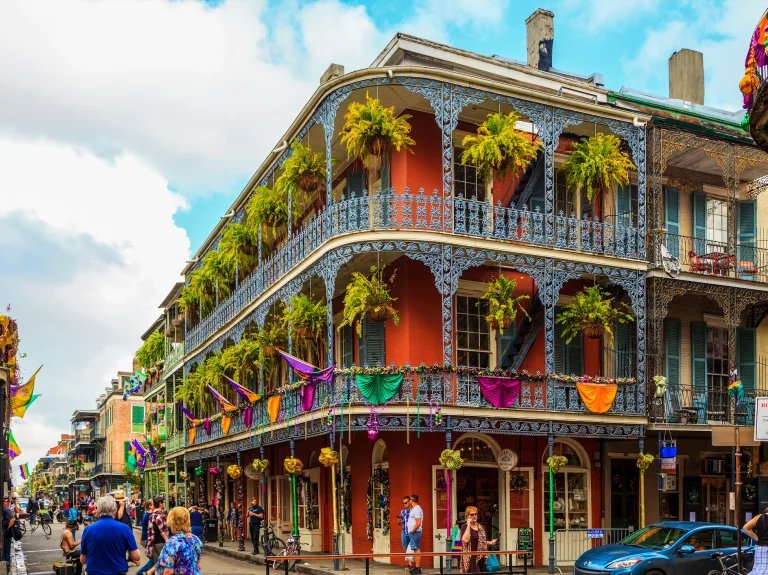
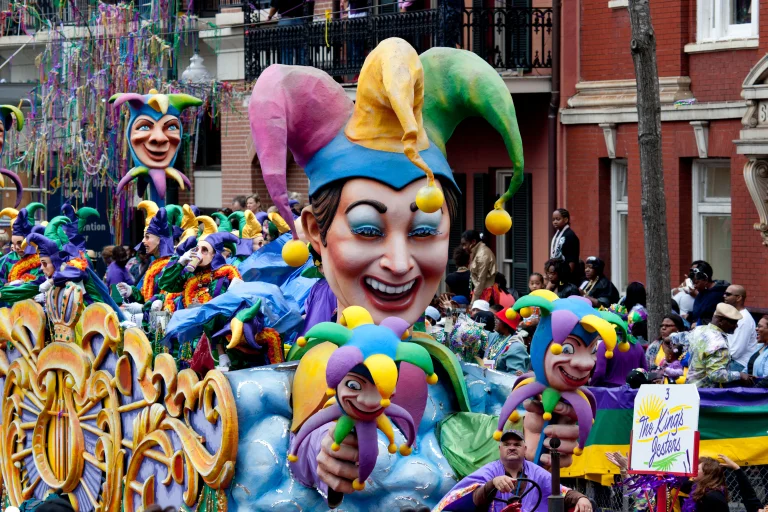
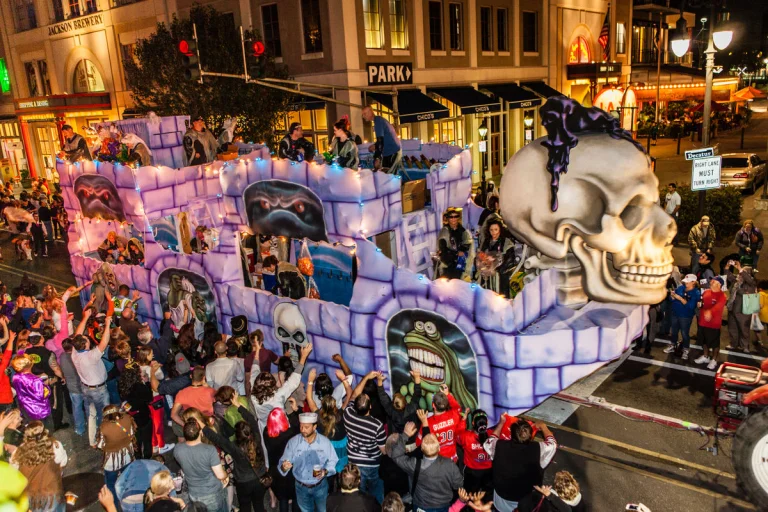
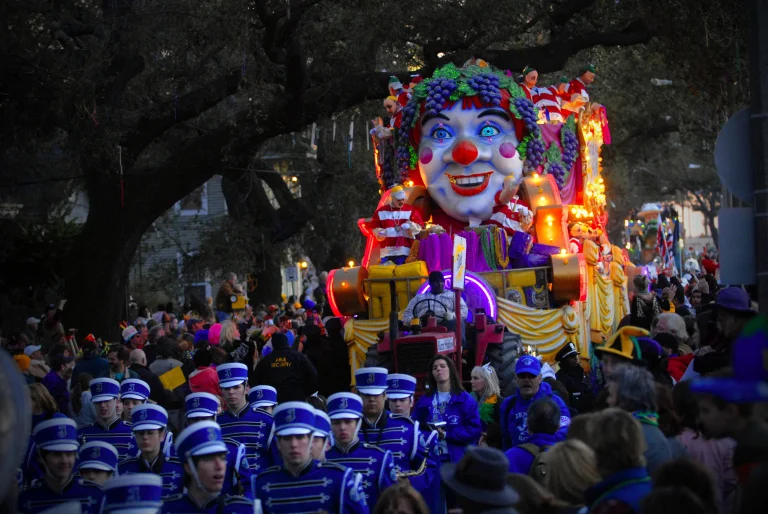
The main event of the year is, without a doubt, the Mardi Gras carnival. During the festivities, the city is immersed in unbridled revelry with parades, giant floats, costumed processions, and the traditional throwing of colorful beads.
Looking at pictures from the Mardi Gras parades, it’s hard not to be swept up in this energy of a riot of colors, costumes, and emotions.

Mysticism, Cemeteries, and Creole Cuisine
New Orleans is famous for its unique, slightly gloomy aesthetic. Due to the high water table, locals have historically buried their dead in above-ground crypts, giving the city’s cemeteries the appearance of true “cities of the dead.” The most famous of these is St. Louis Cemetery No. 1, where the renowned voodoo queen Marie Laveau is laid to rest.
The local cuisine deserves special attention. Creole and Cajun cuisine includes spicy gumbo, hearty jambalaya, po’boy sandwiches, and the famous square beignets, generously dusted with powdered sugar.


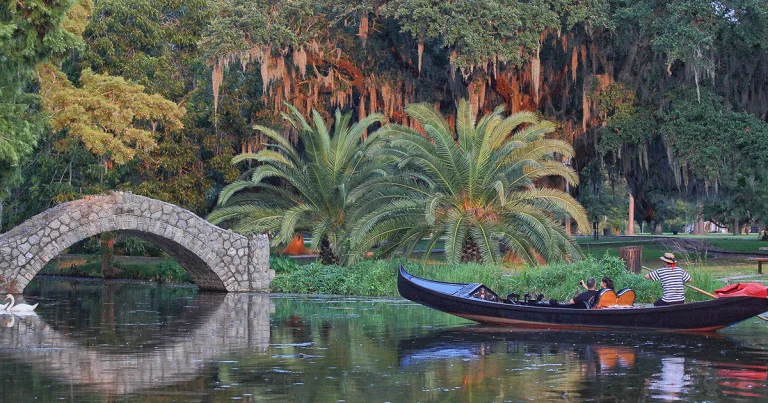
The article “New Orleans” includes a selection of thematic photo and images suitable for website design, articles, blogs, and creative projects. All images are free to download in high quality.
These images are also great as desktop wallpaper for your computer, phone, or tablet.
Don’t forget to rate and comment on this article – it helps other visitors to our site find popular and truly interesting posts and photos more quickly.


Similar Articles


Thematic Albums



Popular Images