Aston Martin "DB":
British character, luxury and speed

In the world of motoring, there are names that are associated not merely with specifications or price, but with an entire culture. The DB range from Aston Martin is one such example. These two letters, which have become synonymous with impeccable British style, have defined what the ideal Grand Tourer sports coupé should look like for over 70 years.
What do the letters DB stand for?
In the history of many car brands, prominent businessmen have played a key role. For Aston Martin, that man was the British industrialist David Brown in 1947. He bought the ailing company through a newspaper advert and immediately reshaped its philosophy.
It was his initials — DB — that formed the basis for the new range of cars. Brown’s vision was simple yet ambitious: to create cars that could transport their owners from London to the Côte d’Azur in the utmost comfort, whilst still being capable of taking to the racetrack at any moment and winning. The first model in the series was the unassuming Aston Martin 2-Litre Sports (later named the DB1), but it was the DB2, with its powerful six-cylinder engine, that truly laid the foundations for the brand’s cult status.
-

- Aston Martin DBR1

-
- Aston Martin DBR1

Agent 007 and the global fame of the DB5
When discussing the DB series, it is impossible to ignore the world of cinema. In 1963, the company launched the Aston Martin DB5, which many motoring experts call the most beautiful car in history. But it was not just its appearance that made it iconic; it was the spy thriller “Goldfinger”.
The pairing of James Bond and the silver DB5 coupé proved so perfect that the car became a character in its own right in the Bond franchise. Catapults, pop-up machine guns and interchangeable number plates — all these gadgets turned the British sports car into the dream of millions. The connection with the films has proved enduring: even decades later, modern models, including the exclusive DB10 created specifically for the film “Spectre“, continue to be the faithful companions of the world’s foremost spy.


The modern era: from the DB9 to the revolutionary DB12
Each new generation of the range has pushed the boundaries of automotive design. The launch of the Aston Martin DB9 in 2004 marked a turning point in the 21st century. Its body, constructed using aluminium and composites, defined the brand’s visual identity for a decade and a half to come, whilst the noble roar of the V12 engine became the hallmark of Gaydon — the brand’s new headquarters.
Today, the baton has been taken up by the latest Aston Martin DB12. The British themselves refer to it not simply as a Grand Tourer, but as the world’s first Super Tourer.
- Farewell, V12: The times dictate their own rules, and the heavy twelve-cylinder engine has been replaced by a thoroughly modernised 4.0-litre twin-turbo V8.
- Mind-boggling figures: This engine delivers an impressive 680 horsepower, propelling the stylish coupé to 100 in just 3.6 seconds. And for those who find even that insufficient, there is the DB12 S variant with an output of 700 horsepower.
- A digital leap: Previous models were often criticised for their outdated multimedia systems. In the DB12, this problem has been solved radically — the interior has been completely redesigned, featuring a modern in-house digital system, whilst retaining the pleasant physical switches for controlling the suspension and exhaust.
-
- Aston Martin DB9

-

- Aston Martin DB9

-
- Aston Martin DB10

-
- Aston Martin DB10 Lagonda

-
- Aston Martin DB10 Bond Special

-
- Aston Martin DB11

-
- Aston Martin DB11

-
- Aston Martin DB11


Aston Martin DB12
Aston Martin DBX: The brand’s first-ever crossover
The launch of the DBX model marked a genuine revolution for the conservative British brand and a response to contemporary trends. It is the brand’s first full-fledged crossover, which has enabled the company to multiply its sales and attract a completely new audience.
-

- Aston Martin DBX

-
- Aston Martin DBX

-
- Aston Martin DBX

-

- Aston Martin DBX

The engineers have achieved the virtually impossible: they have retained the DB series’ signature low-slung silhouette and distinctive radiator grille, whilst transferring this design onto the platform of a spacious, all-wheel-drive SUV with adjustable air suspension.
Aston Martin DBS: The pinnacle of the range and the culmination of the 770 Ultimate
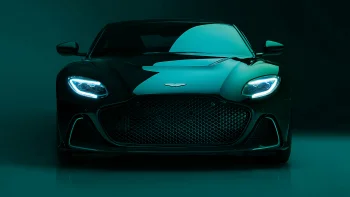
Whilst the standard DB series comprises fast and comfortable cars for everyday use, the abbreviation DBS (where “S” stands for Superleggera, or “ultra-light”) represents the pinnacle of Aston Martin’s engineering expertise. Historically, this name has been given to the most powerful and uncompromising versions of the flagship coupés.
-
- Aston Martin DBS Coupe Centennial

-
- Aston Martin DBS V12

-
- Aston Martin DBS

-
- Aston Martin DBS 2019

-
- Aston Martin DBS

-
- Aston Martin DBS Superleggera

The swan song for this generation of supercars was the limited-edition DBS 770 Ultimate. The British manufacturer tuned its monumental 5.2-litre twin-turbo V12 engine to a staggering 770 horsepower. Production was limited to just 499 units worldwide, and all were snapped up instantly by collectors. This monster was created with a single purpose in mind — to devour kilometres of motorway at speeds of up to 340 km/h, whilst remaining the epitome of gentlemanly style.
-
- Aston Martin DBS 770

-
- Aston Martin DBS 770

-
- Aston Martin DBS 770 Ultimate

The DB series has proven that it is possible to evolve, adapt to stringent environmental standards and new technologies, whilst remaining true to itself. These are still fast, expensive and incredibly charismatic cars for those who appreciate aesthetics and the sheer pleasure of driving.
The article “Aston Martin “DB”: British character, luxury and speed” includes a selection of thematic photo and images suitable for website design, articles, blogs, and creative projects. All images are free to download in high quality.
These images are also great as desktop wallpaper for your computer, phone, or tablet.
Don’t forget to rate and comment on this article – it helps other visitors to our site find popular and truly interesting posts and photos more quickly.


See also:
Similar Articles



Thematic Albums


Popular Images